 Rosedil
Hair Loss From Stress: Why It Starts Months Later and How It Settles
Updated · rosedilhair.com editorial team · Reviewed against public health sources listed below
Short answer: Yes, stress can make your hair fall out, and it usually does it on a delay. A hard event pushes many follicles into their resting phase at once; about two to three months later, those hairs shed together. Doctors call it telogen effluvium. In most women the shedding eases over several months and the hair grows back, because the follicles were resting, not damaged.
Below: how to recognize it, how long it lasts, what helps it settle, and how to tell when something else is going on.
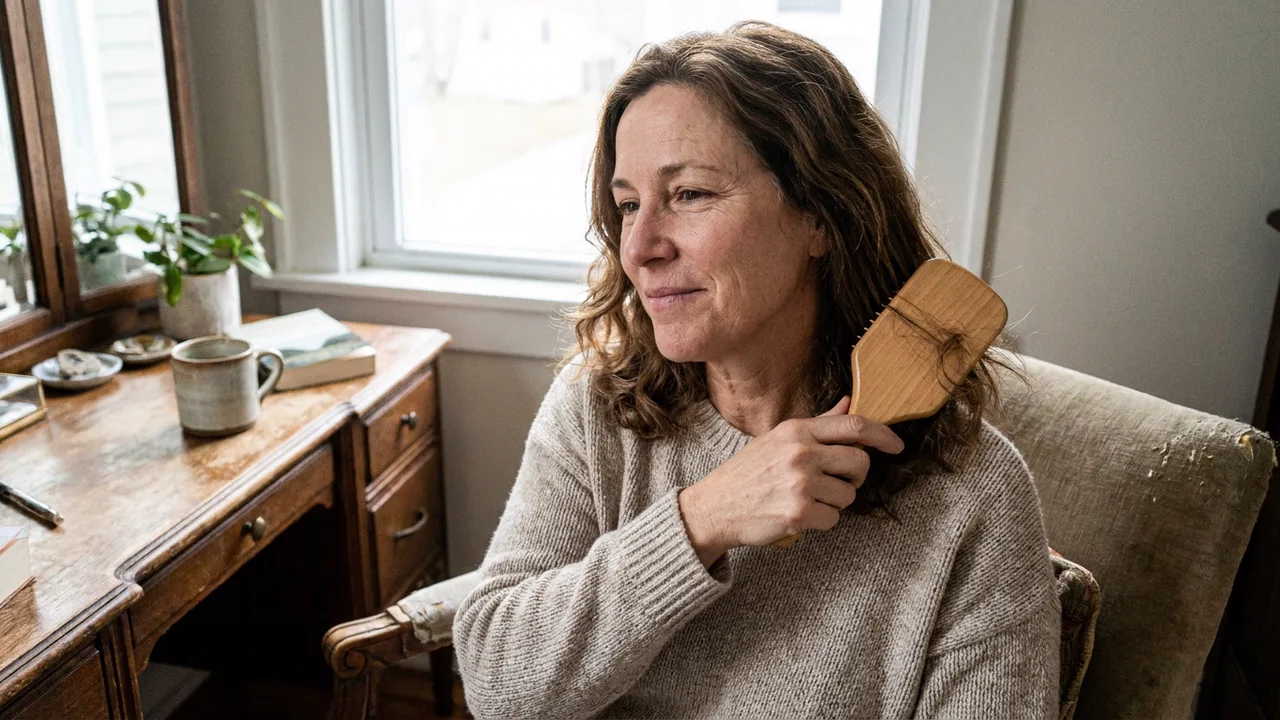
It usually goes like this. The hard part is over: the move, the surgery, the family crisis, the months of caring for someone, the job you lost or the diet that took off too much weight too fast. You finally start to breathe again. And then, out of nowhere, your hair starts coming out in the shower. Handfuls. Your drain clogs. You find strands on your sweater, your pillow, your car seat.
The timing feels cruel, but it is exactly how this kind of hair loss works.
What does stress do to the hair cycle?
On a healthy scalp, most hairs, roughly 85 to 90 percent, are in their growing phase, which lasts years. Only a small share is resting at any time. Each resting hair falls after about three months, and a new one starts in the same follicle. That steady turnover is why losing somewhere around 50 to 100 hairs a day, the range the NHS gives, goes unnoticed.
A strong shock to the body or mind can flip a large group of follicles from growing to resting all at once. The StatPearls chapter on telogen effluvium lists the usual triggers:
- Severe emotional stress: grief, divorce, caregiving, money or job worries
- High fever or a serious infection
- Surgery, a hospital stay or major illness
- Childbirth
- Crash diets and fast weight loss, especially with too little protein
- Starting or stopping certain medications
MedlinePlus notes that a stressful episode can cause anywhere from half to three quarters of scalp hair to shed in some cases. That is why it can look so dramatic.
Why does stress hair loss show up months later?
Because the follicles that switched to resting still hold their hairs for the whole resting phase, about three months. Nothing seems to change at first. Then the resting phase ends for all of them at once, and they let go together.
| Time after the trigger | What is happening | What you see |
|---|---|---|
| 0 to 6 weeks | Many follicles switch to resting | Nothing yet |
| About 2 to 3 months | The resting hairs start to fall | Sudden heavy shedding all over the head |
| 3 to 6 months | New hairs start in the same follicles | Shedding slows; short new hairs along the part and hairline |
| 6 months and beyond | New strands keep growing about half an inch a month | Fullness slowly returns as the new hairs lengthen |
This delay is why so many women never connect the two. If your shedding started recently, think back two to three months. Very often, the trigger is sitting right there.
How to recognize stress shedding
- It is all over the head, not in one patch. Your part may look wider simply because there is less hair everywhere.
- The hairs that fall are full length and often have a tiny white bulb at the root end. That bulb is normal for a resting hair; it means the hair came out from the root, not that it broke.
- Your scalp looks and feels normal. No redness, scaling or pain.
- There was a trigger two to three months earlier.
- The front hairline is usually intact, though it can look thinner at the temples.
If your hair is getting thinner strand by strand over years, without a burst of shedding, that is a different picture. Our guide on shedding versus thinning explains the difference.
How long does stress hair loss last, and will it grow back?
For most women, this is the most important question, and the answer is reassuring. In the common, short-lived form, the shedding usually eases over several months; MedlinePlus says it decreases over six to eight months. The follicles were never destroyed, so new hairs start growing in them. A review of telogen effluvium on PubMed describes a good outlook for recovering hair density in the short-lived form.
What takes longer is getting back to the fullness you had. New hairs grow about half an inch a month, so a strand that has to reach your shoulders needs well over a year. That is why many women feel their hair is "still thin" even after the shedding has stopped: the volume is coming back, just slowly.
If shedding goes on for longer than six months, doctors call it chronic telogen effluvium and look for an ongoing trigger, such as low iron, a thyroid problem, a strict diet, or a medication.
Where Rosedil fits. Rosedil is a hair loss support capsule (60 per bottle) taken at night, before bed, as the label directs. The makers built it for women who are watching their hair thin and want a simple nightly step. See today's kits, from $49 a bottle.
What helps stress hair loss settle?
Deal with the trigger, when you can
Some triggers end on their own, like a fever or a surgery. Others, like ongoing stress or restrictive eating, keep pushing follicles into rest. The NHS suggests practical first steps for stress: talking to someone, regular activity, routine and sleep, and asking for help when it becomes too much.
Eat enough, especially protein
Hair is made of protein, and crash diets are one of the classic triggers. If you are losing weight, slow down and make sure every meal has a source of protein.
Be gentle with the hair you have
Shedding hair is already on its way out, but breakage adds to the thinning look. Loose styles, a wide-tooth comb, lower heat and a mild shampoo all help. Washing does not make more hair fall; it only collects the hairs that were already loose. Our routine for thinning hair lays it out.
Protect your sleep
Poor sleep and stress feed each other. A steady bedtime is good for the whole body, and it is also a natural anchor for any nightly routine you add.
Give it time, and keep a record
Take a photo of your part in the same light every two weeks, and count the hairs in your brush after the same number of strokes once a week. Seeing the trend helps when day-to-day changes are too small to notice.
Stress on top of thinning after 45
After 45, stress rarely arrives alone. Perimenopause, broken sleep, caring for parents and children at the same time: the stressful years often overlap with the hormone years. A wave of stress shedding can land on top of slow pattern thinning, and suddenly the change feels huge.
In that case, the shedding may settle, but the underlying thinning will not settle by itself. This is where the makers of Rosedil say a nightly capsule fits. Their view is that hair loss starts inside the body and that follicles do not die; they fall asleep. The formula is built around concentrated rosemary, Japanese green tea, turmeric with ginger and hydrolyzed type 1 gelatin, taken at night before bed, as the label directs. The first change the makers describe is less hair in the drain, the brush and on the pillow. Results are individual. Read more in menopause and thinning hair.
When hair loss is not just stress
See a doctor if the hair is coming out in round patches, if your scalp is red, scaly, painful or itchy, if the shedding has lasted more than six months, or if you also feel exhausted, cold, short of breath or notice changes in your weight. Ask about iron and thyroid tests.
If stress itself feels like too much, reach out to your doctor or a mental health professional. Talk to your doctor before starting any supplement if you take any medication or have a medical condition. Rosedil does not replace medical care.
The bottom line
Hair loss from stress is real, common and usually temporary. It shows up two to three months after the hard part, eases over several months, and grows back from follicles that were only resting. Look after the trigger, eat enough, handle your hair gently, protect your sleep and track the trend. If thinning after 45 is part of the picture too, add a steady nightly step and give it the months your hair needs.
Ready to start Rosedil?
Three kits, one checkout. The 6-bottle kit brings each bottle to $49, and every kit carries the same 60-day money-back guarantee.

$207 total · 61% off
Free shipping
Choose 3 Bottles
$294 total · 72% off
Free shipping
Get 6 Bottles
$158 total · 55% off
+ $9.99 shipping
Choose 2 BottlesSecure checkout · 60-day money-back guarantee
Payment runs through BuyGoods. Not sold on Amazon, eBay, Walmart, GNC or Walgreens.
Questions women ask
What is hair loss from stress called?
The most common form is telogen effluvium: a large group of hairs moves into the resting phase at the same time after a shock to the body or mind, then falls out a few months later.
Will hair lost from stress grow back?
In most cases, yes. The follicles are not damaged; they are resting. Once the trigger has passed, new hairs usually start in the same follicles, although getting back to full length takes months because hair grows about half an inch a month.
How long does stress hair loss last?
The shedding usually shows up two to three months after the stressful event and, per MedlinePlus, tends to ease over six to eight months. If it continues past six months, doctors call it chronic and look for an ongoing cause.
How much hair is too much to lose in a day?
The NHS puts normal loss at roughly 50 to 100 hairs a day. During stress shedding, women often see several times that, with handfuls in the shower or the brush.
Can stress make thinning after 45 worse?
Yes. A stressful year can add a wave of shedding on top of slow pattern thinning, and the two together make the change feel sudden. That is why it helps to look after both the trigger and the long-term care.
Can I take Rosedil while my hair is shedding from stress?
Rosedil is a hair loss support capsule taken at night before bed, and the first change the makers describe is less hair in the drain, the brush and on the pillow. If you take any medication or have a medical condition, check with your doctor first.
Sources
- StatPearls (NCBI Bookshelf): Telogen effluvium
- PubMed: Telogen effluvium, a review of the literature
- MedlinePlus Medical Encyclopedia: Hair loss
- NHS: Hair loss
- NHS: Get help with stress
Sources describe hair loss in general. They do not review Rosedil.